Hole Rush: Eat All Puzzle
- 4.8
- Rating
- 1.00M
- Installs
- Free
- Price

 Analysis by App-foxy
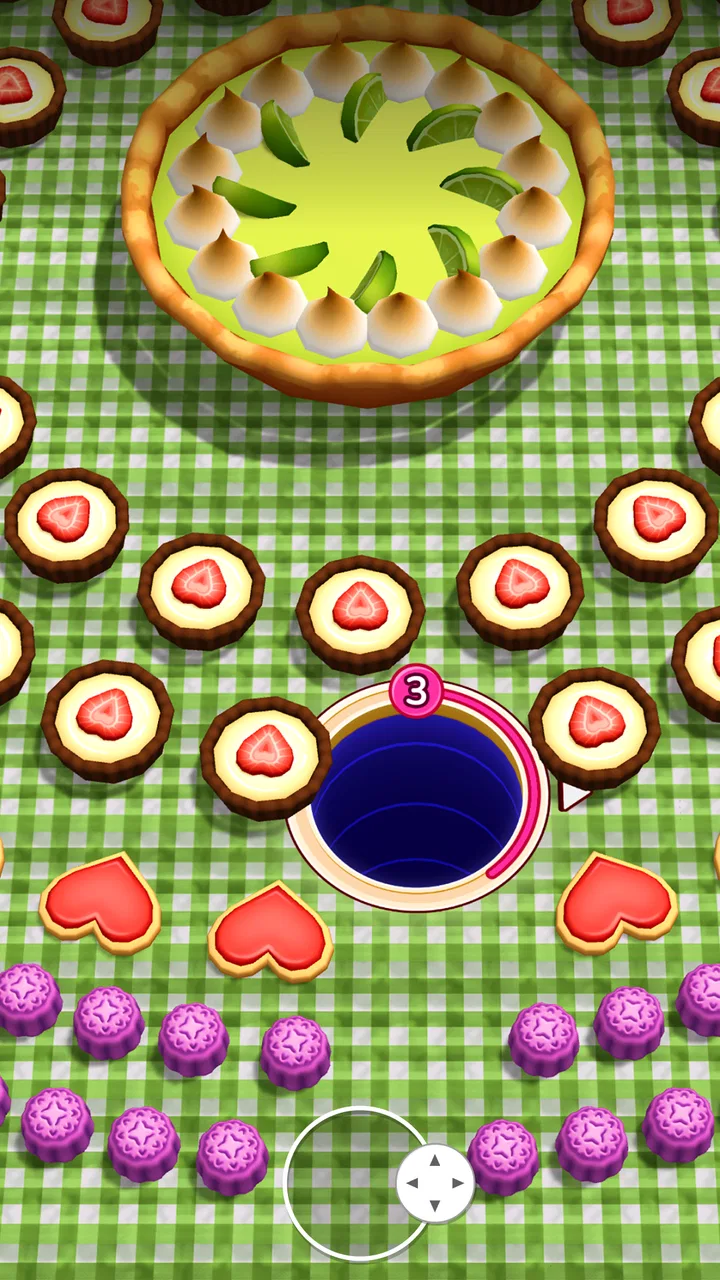
I went into Hole Rush: Eat All Puzzle expecting a quick puzzle game built around a simple idea, and that is exactly where its appeal begins. You guide a growing hole, swallow objects, and work through compact challenges while trying to make better decisions than your first instinct suggests. The controls are easy to understand, but the satisfying part comes from noticing how the board changes as the hole grows and how one move can open the route for the next.
That simplicity makes it a useful game for short breaks. I can play a round while waiting for an appointment, then put it down without feeling as if I have abandoned a complicated campaign. At the same time, the online competition gives the basic eating mechanic a little more pressure. It is not just about clearing space; it is about doing so efficiently and recognizing patterns before the board becomes crowded with missed opportunities.
How the basic loop feels in everyday play
The first few sessions are almost self-explanatory. I look at the available objects, move the hole toward something it can consume, and use the resulting growth to reach larger targets or previously awkward areas. The rhythm is pleasant because every successful action visibly changes what is possible. Instead of solving a static picture and moving on, I am constantly reassessing the board after each useful bite.
You May Also Like

 Blood Strike: 2.5 Anniversary
Blood Strike’s Loadouts Turn Every Drop Into a Tactical Gamble
A close look at Blood Strike’s custom loadouts: how fast access to signature weapons reshapes its battle royale rhythm, rewards preparation, and narrows the gap between fights.

 Pandora - Music & Podcasts
Pandora’s Music Is Easy to Start, but Harder to Recover
Pandora’s strength is its low-effort path from a seed to a station. Its weak spot is how much confidence it asks you to place in connection, setup, and quiet recovery.

 8 Ball Pool
 Is Built on Rivalries, Rematches, and Routine
A close look at the rivalries, rematches, shared routines, and unanswered safety questions that turn a quick pool match into a persistent mobile community.

 Samsung Music
’s Quiet Strength Is Playing What You Already Own
Its reach comes less from spectacle than from dependable access to a personal library. That simplicity is both the app’s strongest retention engine and its ceiling.

 AccuWeather: Weather Radar
AccuWeather Review: A Quick, Clear Forecast for Everyday Decisions
For everyday plans, the best forecast is the one you can understand quickly. AccuWeather makes rain timing, radar, and local conditions easy to act on, with a few trade-offs.

 Hill Climb Racing
Why Hill Climb Racing Still Turns Crashes Into One More Run
A tiny car, a bumpy hill and one more upgrade: Hill Climb Racing keeps resurfacing because its simple chaos makes every near-miss feel personal.
More From Our News Desk
View All News


That makes the game more approachable than many traditional puzzle titles. A conventional match-style game usually asks me to create combinations from a fixed grid, while a physics-heavy puzzle may require careful aiming or timing. Here, the central question is more immediate: which object should I eat first so the next part of the puzzle becomes easier? That small change in thinking gives the game its own identity.
My most reliable baseline workflow is to spend the opening moments scanning rather than moving immediately. I check which objects are close together, which ones appear to lead toward a larger target, and whether an easy pickup would leave the hole in a poor position. The quickest-looking move is not always the most efficient one. A short detour can be worthwhile if it creates a clean route through several objects afterward.
This habit matters especially when I am playing quickly. If I rush toward the nearest item every time, I may consume something useful but end up crossing the same area repeatedly. When I pause for a brief visual plan, the board feels less chaotic. I do not need a perfect solution before starting; I only need a sensible first sequence and the willingness to adjust when the hole grows.
The game also works well as a low-pressure routine. I use it when I want interaction without the concentration demanded by a long strategy game. The controls are approachable enough for casual players, and the Everyone content rating makes it suitable for a broad audience. Younger players may enjoy the immediate visual feedback, while adults can appreciate the short, repeatable challenge without committing to a lengthy session.
There is a trade-off here. Players who want deep story, character development, or a large collection of distinct systems will probably find the experience narrow. The pleasure comes from movement, sequencing, and the gradual improvement of decisions. If that core loop does not feel satisfying after a handful of attempts, additional play is unlikely to transform it into a different kind of game.
What I would check before playing seriously
Because the game is so easy to start, I recommend treating the first sessions as practice rather than chasing perfect results. I pay attention to how much room the hole needs to approach an object and whether a route remains usable after a larger item is consumed. This is more valuable than memorizing a single solution, because the same visual arrangement can feel different when I enter it from another direction.
I also avoid assuming that the biggest visible object should be the first target. In many situations, the smaller objects are the real preparation stage. Clearing them can enlarge the hole and create access to the target that initially looked impossible. That is one of the game’s more rewarding lessons: progress is often created indirectly rather than by attacking the most obvious goal.
For an everyday example, imagine playing during a short train ride with only a few minutes available. I would begin with a quick scan, take the safest cluster, and use the remaining time to test a more ambitious route. If the attempt goes badly, the session still feels useful because I have learned which order wastes movement. That makes the game a better fit for fragmented free time than a puzzle that demands a long uninterrupted chain of thought.
Settings and practical habits worth checking
I would begin by checking the game’s available controls and presentation options before settling into repeated play. Even when a puzzle has simple movement, small differences in touch response, sound, or visual comfort can affect how long I want to continue. The sensible approach is to make the game comfortable first, then focus on efficiency. A setting that reduces distraction can be more useful than any clever route.
I also recommend checking how online competition is presented before treating it as the main objective. Competitive play can make familiar puzzles feel more urgent, but it can also encourage rushed decisions. I get better results when I first establish a dependable clearing rhythm and only then try to improve speed. Otherwise, I tend to sacrifice a clean sequence for a move that looks impressive but leaves the hole in an awkward position.
Shortcuts in this game are mostly habits rather than secret commands. I keep my thumb or finger positioned so that I can make a controlled change of direction instead of dragging wildly across the screen. I also try to begin each attempt with the same scan: nearest cluster, likely growth path, and possible dead-end area. Repeating that checklist reduces hesitation and makes it easier to identify whether a failed attempt came from poor planning or imprecise movement.
Another useful habit is separating experimentation from score-focused attempts. During an exploratory run, I deliberately test an unusual order or approach a difficult section from a different angle. During a serious run, I avoid changing the plan without a reason. This distinction prevents frustration because not every failed attempt is a performance failure; sometimes it is simply information gathered for the next try.
The free entry point is important here. I can try the core experience without paying, which lowers the risk for anyone unsure whether this style of puzzle will hold attention. The game includes in-app purchases ranging from $2.49 to $99.99 per item, so I would approach optional spending carefully and decide in advance whether I want to keep the experience entirely free. For me, the basic loop should be enjoyable without treating purchases as part of the normal solution process.
Faster patterns that improve consistency
Once the basic workflow feels natural, I start looking for repeatable patterns. The first is the “small-to-large” sequence: clear manageable objects that increase the hole’s options, then move toward the larger targets. This is not a universal answer, but it is a dependable starting point because it reduces the number of situations where I am staring at an object I cannot yet reach effectively.
The second pattern is to protect open space. A growing hole is useful only if I can maneuver it. If I consume objects in a way that pushes me into a corner or blocks the cleanest route across the board, size alone does not help. I therefore think about where the hole will finish after each action, not only what it will consume. That small change makes my movement more deliberate and cuts down on unnecessary backtracking.
A third pattern is to treat clusters as sequences rather than individual targets. When several objects sit near one another, I look for an entry point that lets me pass through the group smoothly. Moving toward the middle may be tempting, but approaching from the edge can create a more controlled chain. The best route is often the one that keeps the hole moving forward instead of forcing a turn after every bite.
These patterns are particularly helpful in online competition. Speed matters, but speed without order creates mistakes. I would rather use a slightly longer route that I can execute cleanly than gamble on a direct line that leaves me correcting position repeatedly. Experienced play in this kind of puzzle is less about frantic movement and more about reducing decisions while the board is changing.
I also find it useful to review the moment when a run loses momentum. Usually, the problem is not the final mistake; it is an earlier choice that narrowed the available routes. Perhaps I consumed an object from the wrong side, ignored a compact cluster, or entered a tight area before the hole was ready. Looking back one or two moves helps me fix the cause instead of merely blaming the last action.
Where the puzzle starts to test patience
The same simplicity that makes Hole Rush accessible can eventually expose its limits. The basic action remains familiar, so players who need constant mechanical variety may feel that later sessions are more about refinement than discovery. I enjoy that kind of improvement, but I understand why someone looking for new rules, elaborate level types, or a story-driven reason to continue might prefer another puzzle game.
Precision can also become a source of friction. When the board is crowded or when I am trying to move quickly, a small change in direction can alter the whole sequence. That is not necessarily a flaw in the concept, but it means the game rewards calm input. Players who prefer completely predictable grid movement may find this less comfortable than a traditional tile puzzle.
The competitive layer creates another trade-off. Online play gives the game a reason to revisit familiar skills, yet it can make a relaxed puzzle feel like a timed performance. I would recommend it to players who enjoy comparing efficiency, but not to someone who wants every session to remain quiet and consequence-free. The better choice depends on whether competition adds motivation or simply turns a pleasant break into pressure.
Long sessions may also reveal repetition sooner than short sessions do. I think the game is strongest in compact bursts, where the eating mechanic feels refreshing and each attempt has a clear purpose. If I continue far beyond that point, the central loop has less room to surprise me. Taking a break is not a weakness of the game; it is the way I get the most enjoyment from it.
Device compatibility is reasonably broad, with support beginning at Android 7.0. The current version is 2.2.0, and the game has already passed one million installs, while its average rating sits at 4.8 from around 37 thousand ratings. Those figures suggest that the straightforward concept has found a substantial audience, but they should not replace personal testing: a popular casual puzzle can still be a poor match for someone who dislikes repetition or touch-based navigation.
Who should play it, and who should look elsewhere
I would recommend this game to anyone who likes compact puzzles with visible progress, simple controls, and a little competitive tension. It is especially suitable for players who enjoy optimizing routes rather than collecting complicated upgrades. Families may also appreciate the accessible premise and Everyone age rating, provided that adults keep an eye on optional in-app purchases when younger players use the device.
It is a good choice for a commuter, a student taking a short break, or anyone who wants a game that can be understood immediately but still rewards better sequencing. The free price makes trying it straightforward. I would install it first for the core movement and puzzle loop, then decide whether the online element adds enough replay value to keep it in regular rotation.
I would skip it if my priority were a large narrative adventure, a deep logic system with many rule changes, or a puzzle game built around long, carefully scripted solutions. A classic grid-based alternative may be better for someone who wants absolute positional precision. A physics puzzler may suit someone who prefers experimentation with objects and trajectories. Hole Rush occupies a lighter middle ground: more active than a purely turn-based brain teaser, but less elaborate than a full physics or strategy game.
I would also be cautious if I disliked games that encourage repeated attempts. The best results come from noticing patterns, changing the order of actions, and trying again with a cleaner plan. There is satisfaction in that loop, but it depends on accepting small failures as part of learning. Players who want immediate novelty in every round may find the repetition less rewarding.
My verdict after learning the rhythm
What keeps me coming back is not the act of swallowing objects by itself. It is the gradual shift from reacting to planning. At first I simply chase whatever is nearby. Later I start reading the board as a route, protecting open space, and choosing actions that prepare the next two moves. That progression gives the simple premise enough depth for regular short sessions.
The game is at its best when I use it deliberately: scan before moving, clear smaller targets to create options, preserve room to maneuver, and treat competitive attempts as a separate mode of concentration. Those habits make the experience feel more skillful without pretending that it is a huge or endlessly varied puzzle platform.
There are real limitations. The central mechanic can become repetitive, touch movement may punish rushed corrections, and online competition will not appeal to everyone. The purchase range also means I would keep spending under control rather than assuming every optional item is necessary. Still, the free starting point and approachable design make it easy to decide for myself.
For my taste, Hole Rush: Eat All Puzzle is a strong recommendation for short, satisfying puzzle sessions rather than an all-day game. Bluetile has built its appeal around a clear action and a useful learning curve: eat intelligently, keep the route open, and improve the order of your decisions. If that sounds more enjoyable than a story-heavy adventure or a rigid tile puzzler, it is worth trying. If you need constant new systems, deep narrative, or complete control over every grid position, another category of game will serve you better.
FAQs for Hole Rush: Eat All Puzzle
01What is the main objective of Hole Rush: Eat All Puzzle?
In Hole Rush: Eat All Puzzle, the main objective is to control a hole that moves around the screen, aiming to swallow various objects scattered across different levels. The challenge lies in strategic movement and timing to ensure you consume everything before time runs out or obstacles get in your way.
02Is Hole Rush: Eat All Puzzle free to play?
Yes, Hole Rush: Eat All Puzzle is free to download and play. However, it does include in-app purchases and ads that can enhance gameplay or remove advertisements. Players can choose to purchase additional items or features to enrich their gaming experience.
03What kind of in-app purchases are available in Hole Rush: Eat All Puzzle?
Hole Rush: Eat All Puzzle offers a variety of in-app purchases, such as extra lives, power-ups, and skins for your hole. These purchases can help you progress faster through challenging levels or personalize your gameplay experience. Prices for these items vary, so be sure to check the store for current options.
04Are there offline play options in Hole Rush: Eat All Puzzle?
Yes, Hole Rush: Eat All Puzzle can be played offline, making it a great option for gaming on the go without needing a constant internet connection. However, some features, such as leaderboards or daily challenges, may require an internet connection to access fully.
05What age group is Hole Rush: Eat All Puzzle suitable for?
Hole Rush: Eat All Puzzle is designed for players of all ages, though it is most suitable for those who enjoy casual puzzle games. The controls are straightforward, making it accessible for younger players, while the increasing difficulty levels offer a challenge for more experienced gamers.
Pros
- Engaging and addictive gameplay.
- Simple controls for easy navigation.
- Variety of levels to explore.
- Appealing graphics and animations.
- Offline play available for convenience.
Cons
- Occasional in-app ad interruptions.
- Limited customization options.
- Some levels may feel repetitive.
- Requires frequent updates for new content.
- No multiplayer mode available.

Hole Rush: Eat All Puzzle
Gallery